
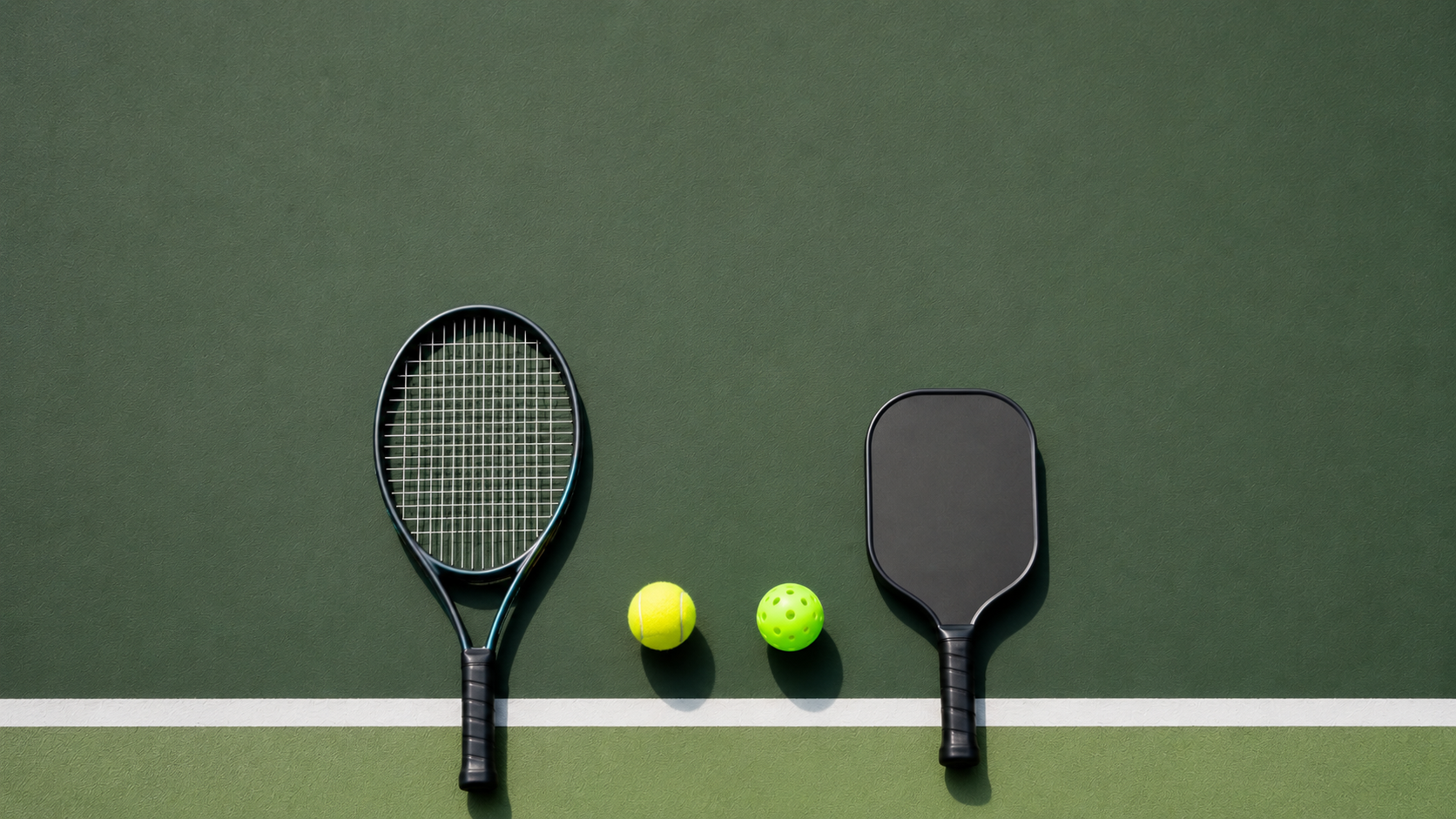
Tennis players have a head start in pickleball. Court awareness, footwork, racquet skill, the ability to track a small ball, all of it transfers. You'll be playing rally points by your second session.
Tennis players also have habits that actively hold them back at the next level. The best tennis-to-pickleball transitions involve unlearning, not just learning.
This is the conversion guide.
What transfers (a lot)
Five things you bring from tennis that work immediately:
- Court coverage. You already know how to position, recover, and move with anticipation. Pickleball's smaller court rewards this even more.
- Racquet skill. Eye-paddle coordination crosses over directly. You'll have decent contact from session one.
- Reading the ball. You can pick the bounce, the spin, the pace. Pickleball's slower ball makes this easier.
- Strategic awareness. Cross-court patterns, depth control, recovery timing, pickleball uses the same playbook with a smaller stage.
- Match temperament. You've handled losing rallies before. You'll handle them in pickleball.
This is why most tennis players reach an intermediate pickleball level inside three months.
What hurts (more than you'd expect)
Now the hard part. The same skills that help can also trip you.
1. The wind-up swing
In tennis, you take a big swing for power. In pickleball, the ball doesn't reward power the same way, it rewards placement and pace control. Big tennis swings overshoot, hit out, and leave you out of position.
Adjustment: shorten everything. A pickleball drive uses about 60% of your tennis swing. Volleys are even shorter, barely a flick.
2. Standing back
In tennis, you defend from the baseline and approach the net selectively. In pickleball, you approach the net every single point you can. The kitchen line is where doubles is won.
Tennis players instinctively retreat to the baseline after the return. They lose because their opponents claim the kitchen line first.
Adjustment: after your serve, after your return, move forward. Stop at the kitchen line. Stay there.
3. The high-contact volley
Tennis volleys are often shoulder-high or above. Pickleball volleys at the kitchen line happen at chest or waist height, and the most common kitchen mistake is reaching down and tipping the ball into the net or popping it up.
Adjustment: bend your knees. Stay low. Volley with the paddle face slightly open and a soft hand. The ball wants to do less than you think.
The three habits to unlearn
If you only fix three tennis habits, fix these.
Unlearn: hitting through the ball
In tennis, you drive through. Long follow-through, weight transfer, low-to-high.
In pickleball, especially at the kitchen, the ball needs to die on contact. Soft hands, paddle face slightly open, very little follow-through. Think table tennis push, not tennis groundstroke.
Drill: stand at the kitchen line. Your partner dinks to you. Aim to stop your paddle at contact, let the ball drop into the kitchen. Repeat 100 times.
Unlearn: defending mid-court
The middle of a pickleball court (between the baseline and kitchen line) is no man's land. Get caught here and you'll get punished.
Adjustment: commit forward or commit back, never linger. When you're returning serve, hit your return deep and immediately move forward to the kitchen. Don't stop at the service line.
Unlearn: power serving
Tennis serves win points. Pickleball serves don't, they start them. The serve is underhand, low contact, paddle below wrist. The strongest player in pickleball can't ace someone with a serve the way Federer can.
Adjustment: stop trying to win the point on serve. Aim for depth. Aim for the corners. Get the ball in. Win the point in the rally.
A tennis player who can hit a flat 100 mph forehand needs to dial down to about 30% on a pickleball serve. Sounds insulting. Works.
What to drill in your first month
Three drills will accelerate the transition:
- Dinking, both diagonals. 50 cross-court forehand dinks, 50 cross-court backhand dinks, every session. This is the most underdeveloped skill of every tennis-to-pickleball convert.
- Third-shot drop. After the serve and return, the serving team's third shot is the moment of the rally. Practice arcing a soft shot from baseline-ish position into the opponent's kitchen. This is the exact opposite of a tennis approach.
- Volley reset. When the ball is hot at your face, learn to softly bunt it back into the kitchen instead of swinging. Soft hands. Paddle face open. Reset, don't counter-attack.
Spend 20% of every session on these three drills for one month. Your level jumps.
What paddle to start with
Tennis converts often gravitate toward the most powerful paddles available. That instinct is wrong.
A paddle with too much pop will exaggerate the swing problem, you'll hit out more, miss more dinks, and feel like you've lost your touch.
Start with a control-leaning paddle: the Selkirk SLK Halo Control under HK$1,100 is ideal. After a month, if you genuinely miss the thwack, the Gearbox CX14H Ultimate Power is the cleanest tennis-convert upgrade.
Or take the paddle finder quiz, it's tuned to weight tennis backgrounds correctly.
The mindset shift
The single biggest mental adjustment is this: pickleball rewards consistency, not power. The first 20 strikes of a rally are usually dinks. The player who can rally 30 dinks without missing, and then patiently wait for an unforced error or a pop-up, will beat a tennis hitter every time.
Tennis trained you to look for the winning shot. Pickleball trains you to wait for it. Adjust your patience and your level will jump faster than your skill.
See you at the kitchen line.
Read common beginner mistakes for the next layer up.